Ode To Dave
From our team at CHESS:
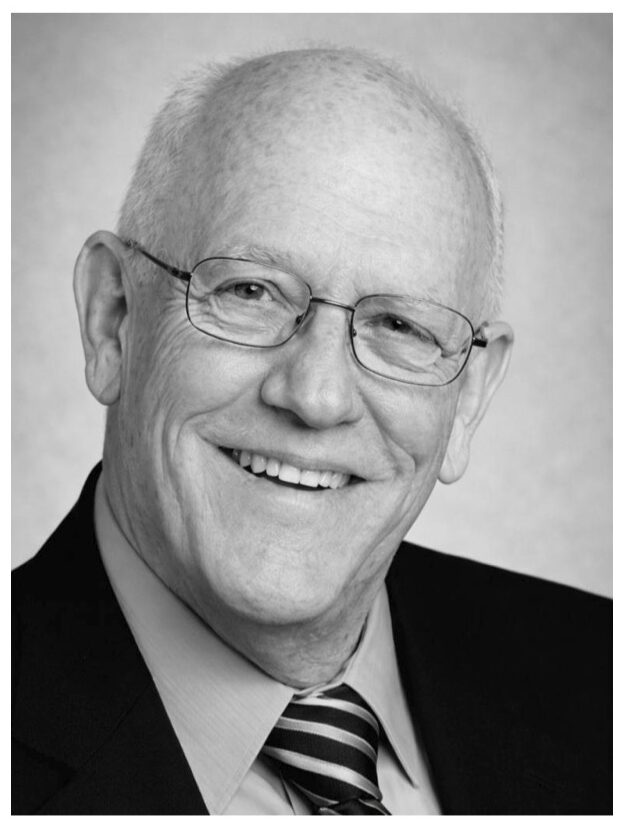
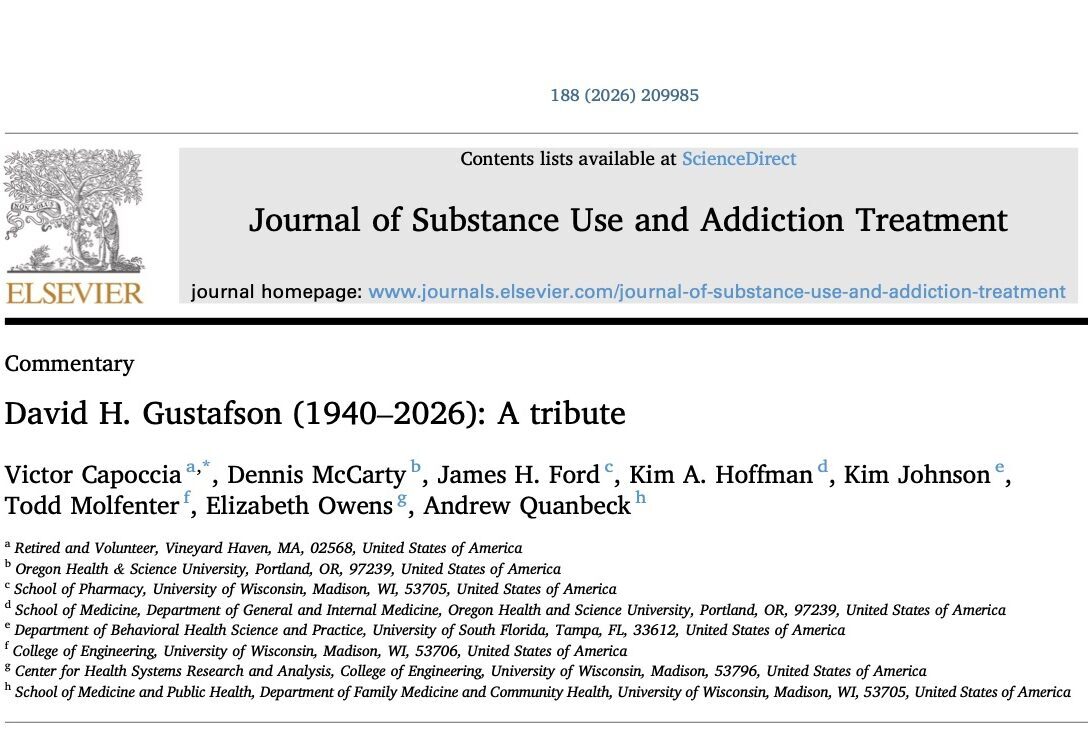
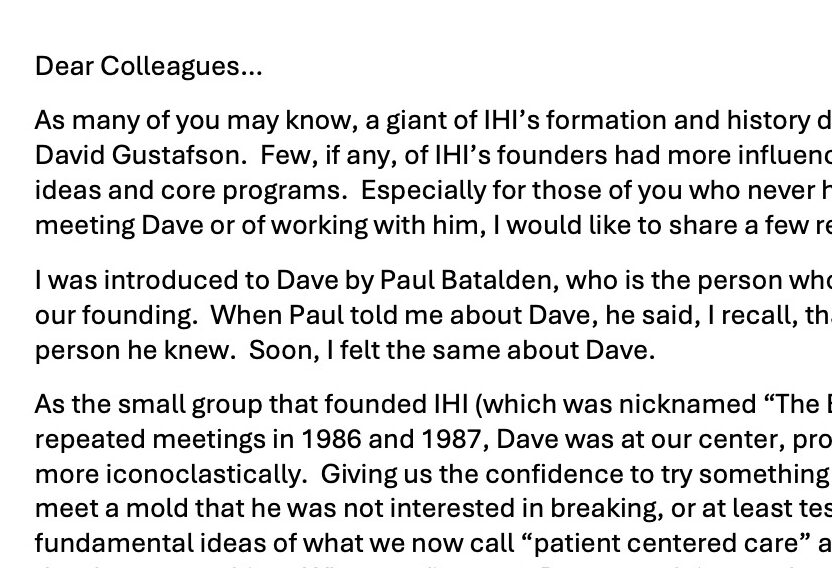
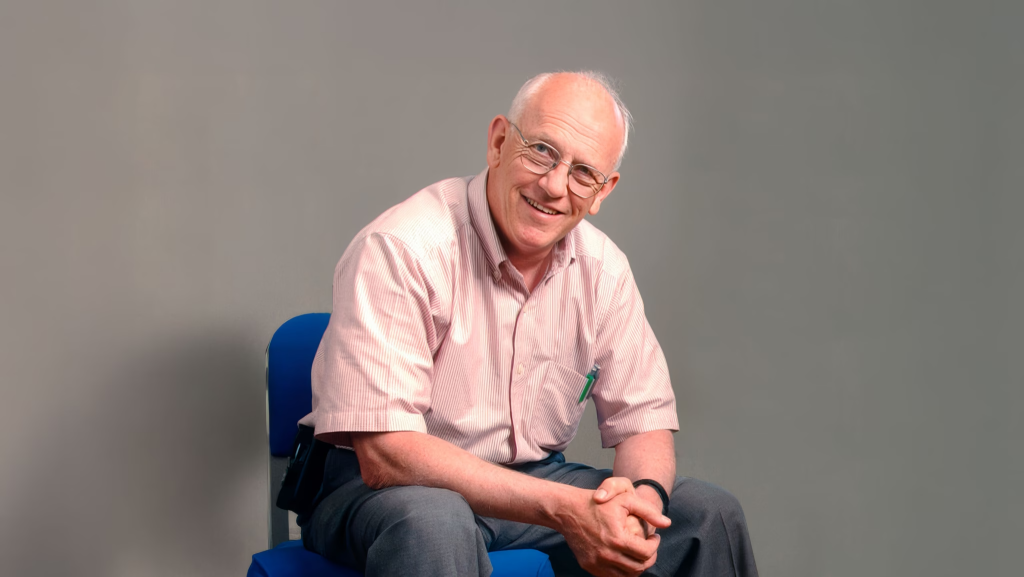
Dave Gustafson always wanted to help people—whether his students, people with breast cancer needing social support, those with addiction, or their families. In his last decade, supporting families became his passion. His care for others profoundly shaped his work, his research, the interdisciplinary Center he created (the Center for Health Enhancement Systems Studies, or CHESS), and the relationships he built with students, colleagues, and collaborators. Dave’s family was at the center of his life. Their experiences often shaped the questions he asked and the research he undertook.
Dave came to Madison as a bright-eyed and already successful researcher from his endeavors at the University of Michigan. There, he achieved many academic accomplishments and had started an innovative industrial engineering staffing service for hospitals. At UW–Madison, his illustrious academic career spanned more than six decades and included nearly 350 peer-reviewed publications and more than 30 competitive multi-year research grants.
His work in interactive health care communications made him a titan in academia. Through his cancer and asthma research, he helped pioneer what would later become patient health portals. He focused on cancer because of his wife’s breast cancer diagnosis and on asthma because of his grandson’s asthmatic attacks. He developed a computer-based framework to assist patients in dealing with their diagnosis by providing information and decision support, and, most popularly, online chat rooms where people with the same diagnosis could bond and support one another in a system called CHESS. His work in the digital space began with kiosks that could fit a mainframe computer, then evolved through desktop and laptop computers to phones (which proved even more successful than his computer systems), and later to downloadable apps and voice-activated systems (hello, Alexa). He did all of this by focusing on patients, their families, and their needs. Much of this is commonplace today, but Dave, through his research and care, was among the first to develop these technology tools to help people manage their health.
Another amazing part of Dave’s career began when the Robert Wood Johnson Foundation called and asked Dave whether he could apply all he had learned about making and predicting successful organizational change to the field of addiction treatment. That call changed the addiction (or substance use disorder) treatment field forever. Dave embraced the mission of improving access and retention for those who need addiction support and making sure they get faster and better treatment. He founded the Network for Improvement of Addiction Treatment (NIATx), which dramatically improved access to care and the care patients receive. The “NIATx system” has been implemented across more than 4,000 organizations and has been the subject of more than 50 peer-reviewed articles demonstrating its effectiveness.
As we begin the process of reflecting on Dave’s professional impact through the CHESS and NIATx spheres, either of which would have been the highlight of most academics’ careers, it’s clear that Dave is best known for the difference he made in the lives of the people he touched, and that is what he would be most proud of. Dave’s former students and colleagues around the world are deeply indebted to him for shaping their careers, their moral compass, and the actions they have taken in turn to improve the lives of others.
Dave, in your life, your star burned bright. In tribute to your extraordinary career, the CHESS Center will carry forward your legacy of improving health care and supporting patients and their families.
Thank you, Dave. We’ll miss your bad jokes, your amazing intellect, and most of all, your big heart (old and new!).